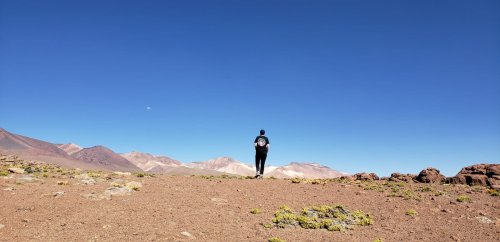
We arrived in San Pedro de Atacama at night and had only enough time for a quick dinner ahead of our 6am start the next day. It did look a lovely little town, but unfortunately we never got to see it properly. We were only there as it was the starting point of a desert tour we’d booked. The tour was for three days and would take us across the Bolivian border and through the Atacama desert to Uyuni, where we’d see the famous salt flats.
We started by bus and once we’d crossed the border (a painless experience when your driver has friends at border control 🙂 ), switched to a 4WD jeep. There were 5 in our group in total: Juan from Madrid, Marcos from Barcelona, Alexandra from Bamberg and us.
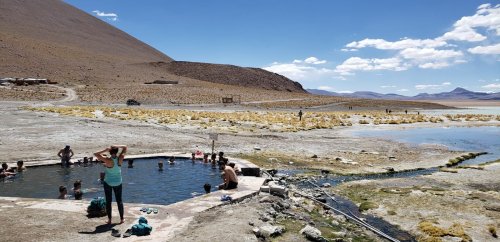
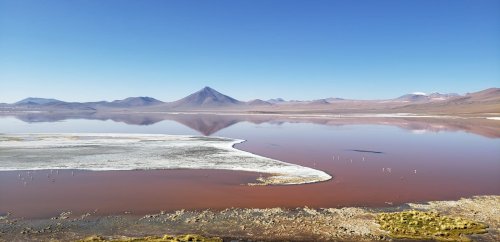
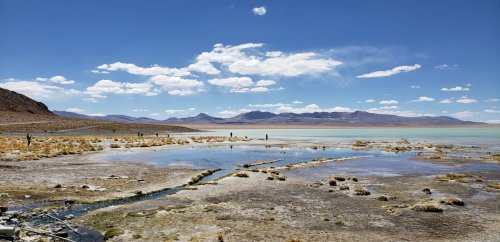
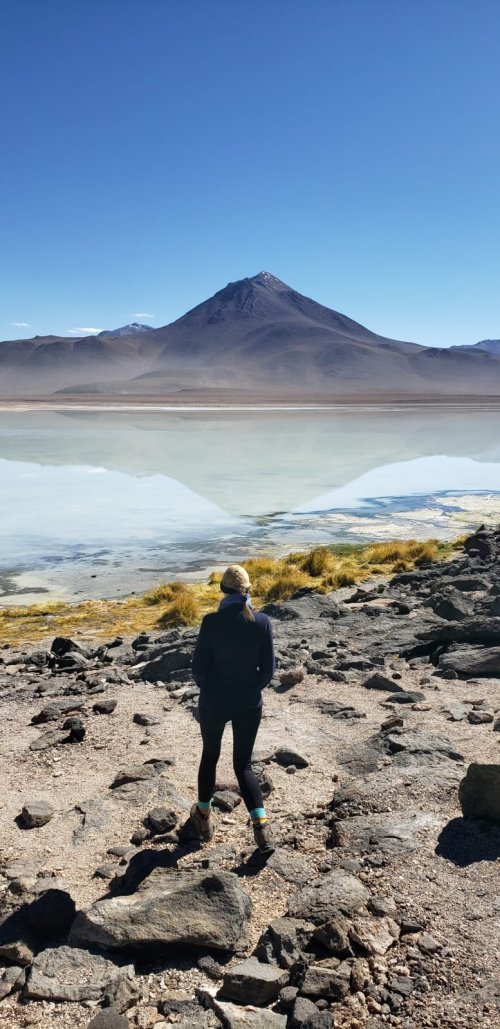
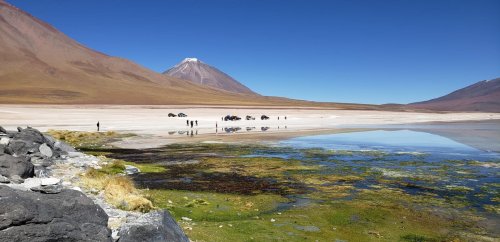
Our first few stops were to various lagoons, one of which had a thermal bath attached. Still being morning, the desert chill had not yet lifted, so while the warm water was a delight, the dash to and from was less so. We could only spend a few minutes in the bath before risking sickness from the sudden changes to body temperature- our first insight into the extreme conditions of the desert!
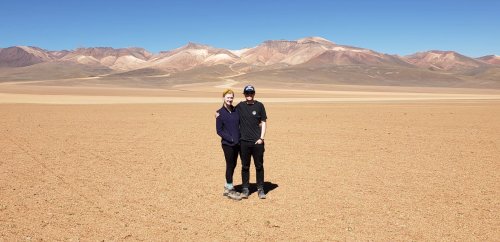
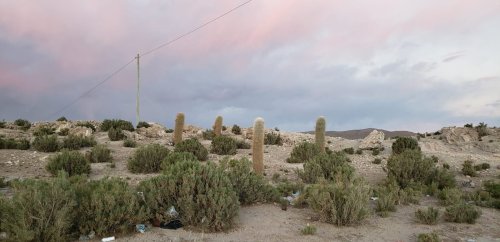
After the bath, we continued driving across miles of vast, scrubby landscape, gradually ascending over 4,000ft above sea level. By the time we reached our next stop, a baking heat had beaten out any trace of cold and we felt ourselves slowly succumbing to altitude sickness. Thankfully it wouldn’t get much worse than a little lightheadedness and some runny noses.
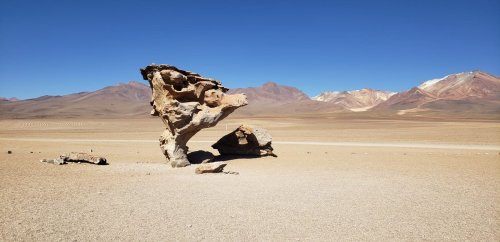
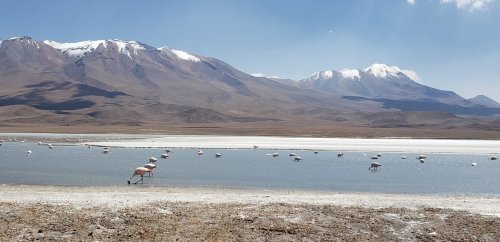
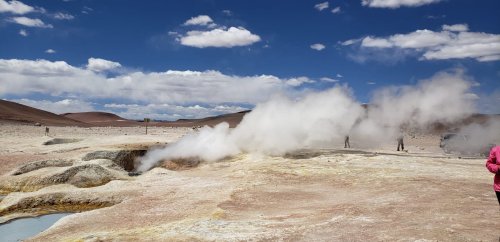
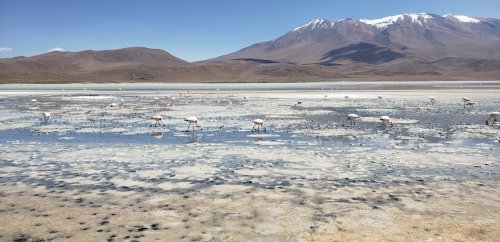
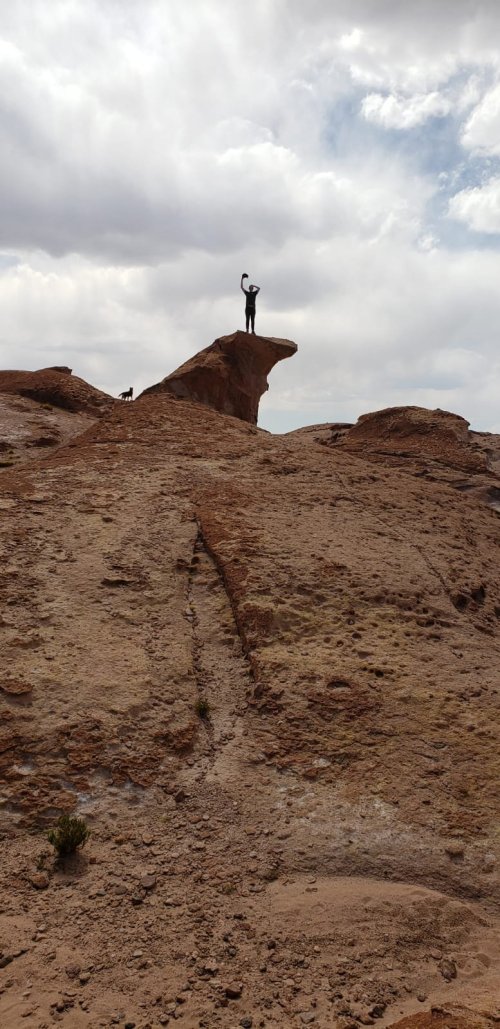
The next few stops included flamingo inhabited lagoons, mini salt flats, a geyser and wind-eroded rocks.
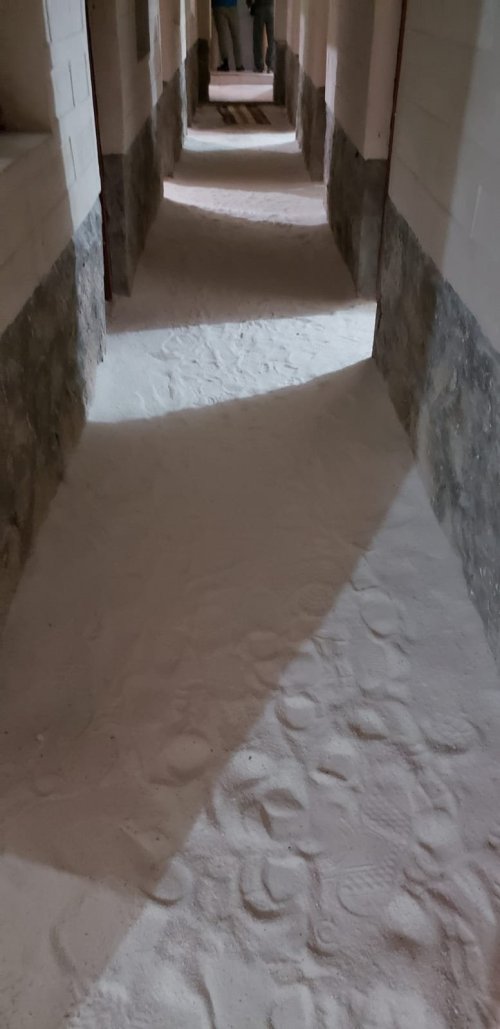
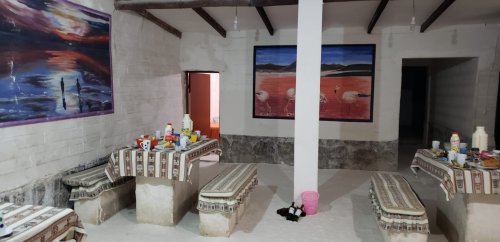
Our accommodation on both nights was basic but comfortable, and we were well fed by our mná tí. Our second hostel was particularly interesting as it was built from salt-based bricks and completely carpeted with salt. Handy for seasoning your dinner, not so pleasant stepping on after a shower.
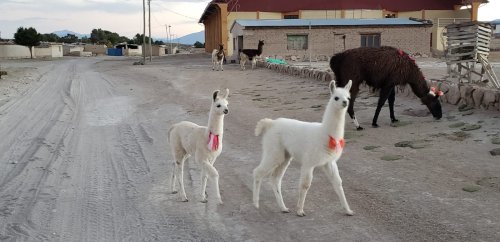
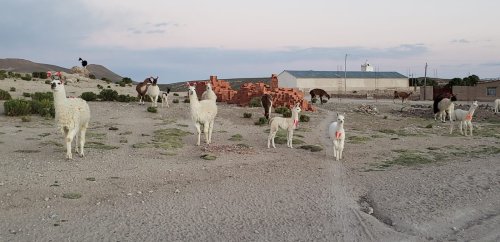
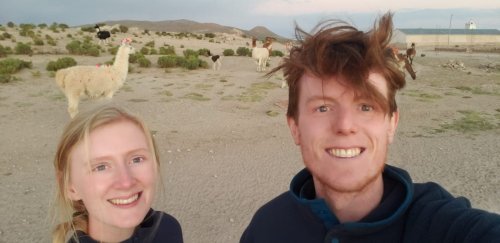
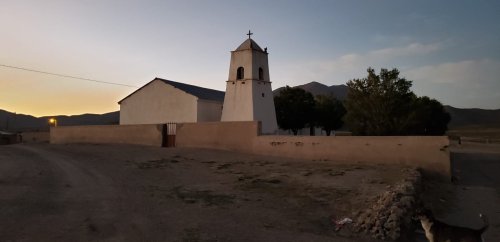
In the small town of San Juan, where the hostel was based, we saw llamas grazing and playing, and were lucky enough to get a closer look at the fluffy, somewhat aloof animals we’d only seen through the jeep window until now.
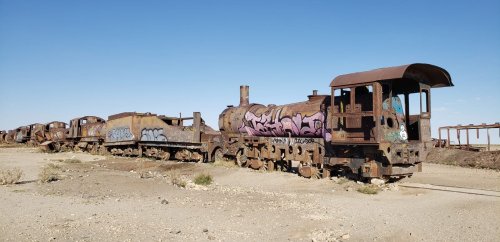
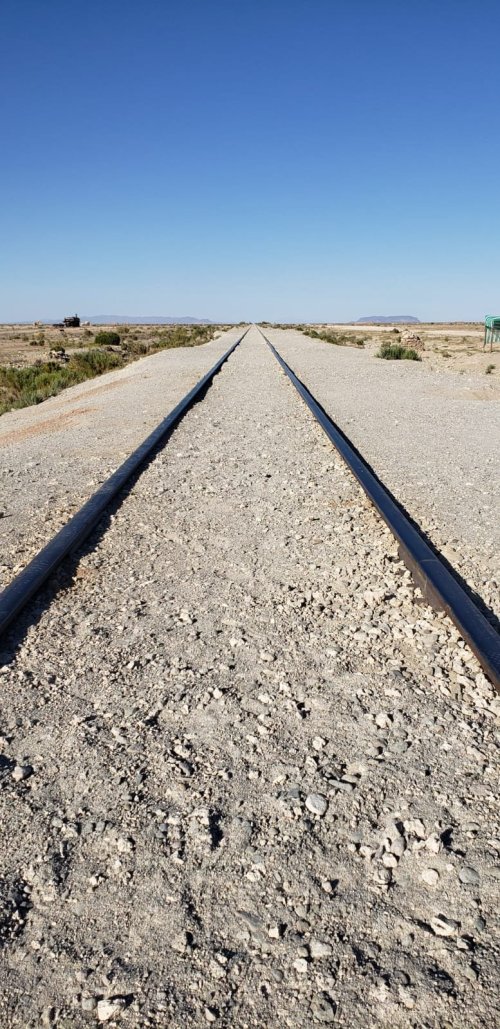
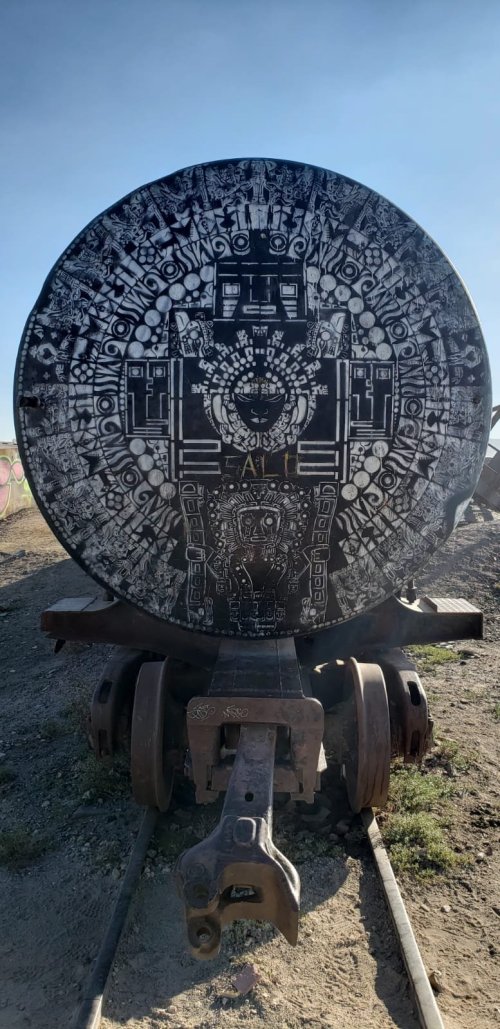
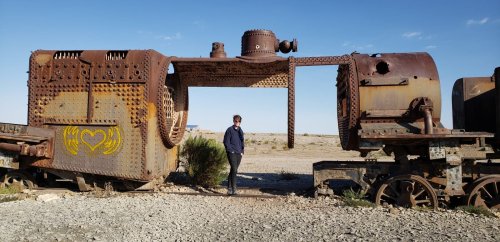
We were up at 5am on our final morning and headed out to Cemeterio de Trenes, a vast scrapyard filled with old, rusted trains and carriages. In the 19th century, when plans to expand Uyuni’s network of trains and reputation as a transportation hub in South America fell apart due to technical difficulties and tensions with neighbouring countries, the trains were left to rust. Today they are one of Uyuni’s biggest tourist attractions, after the salt flats.
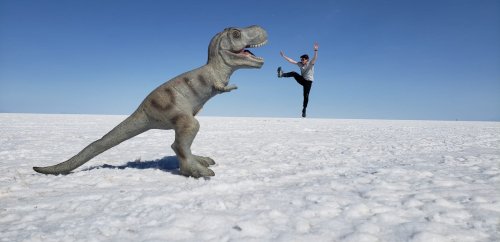
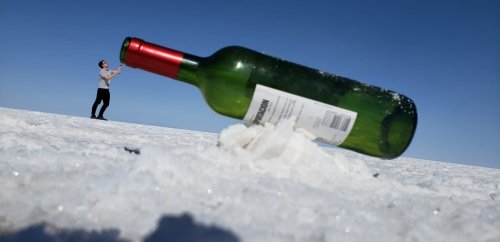
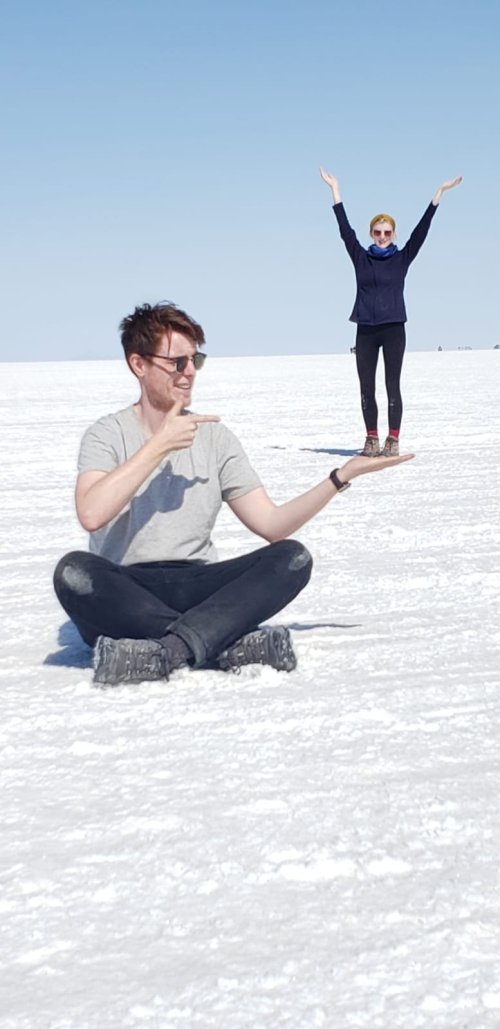
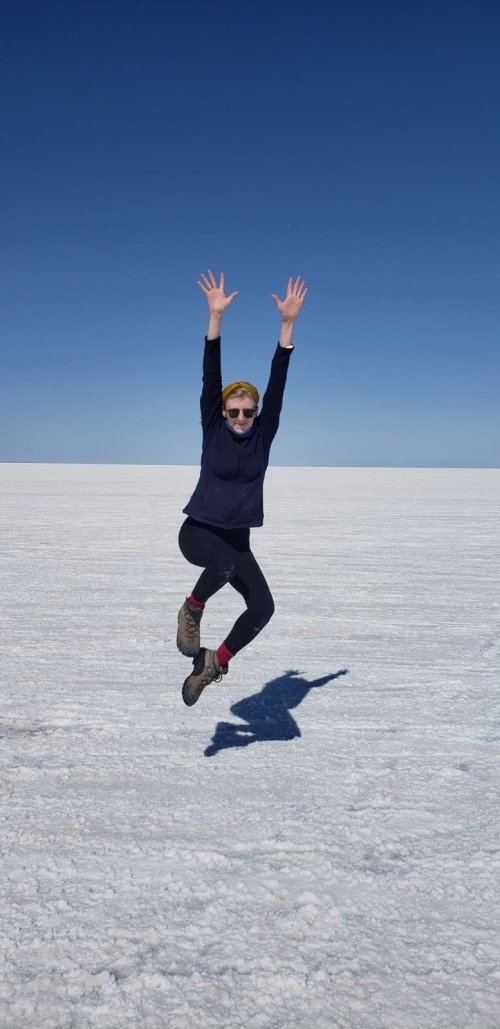
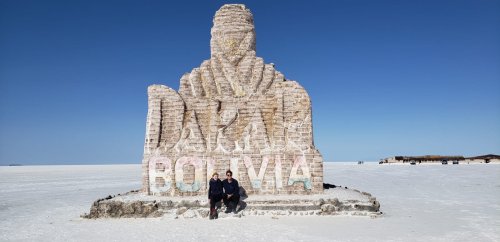
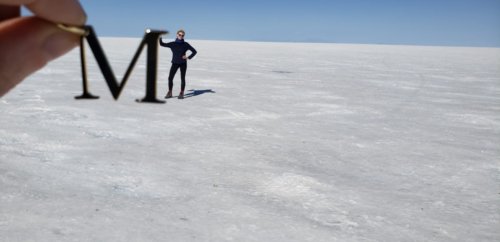
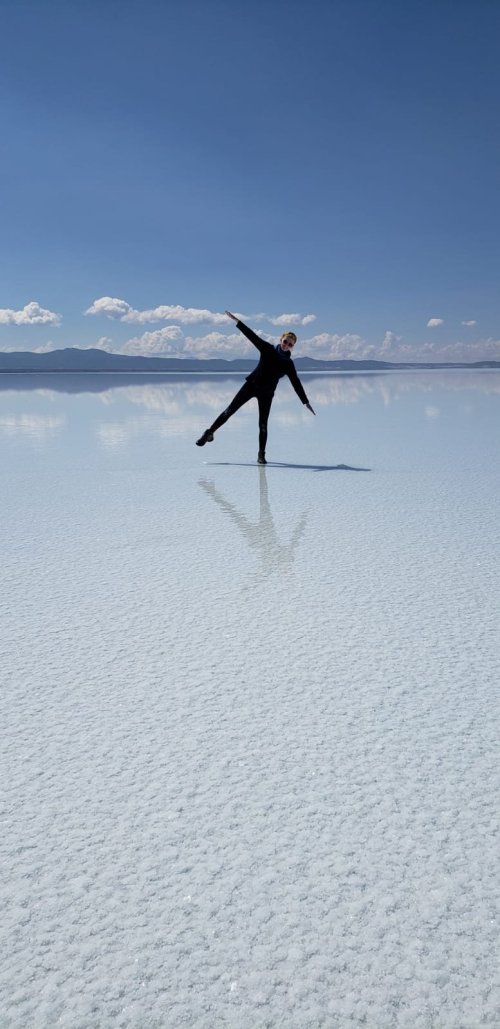
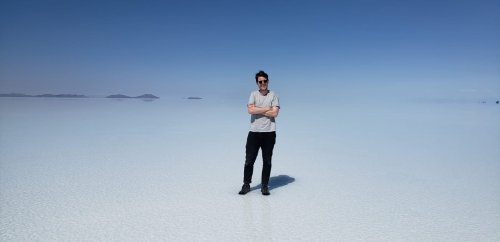
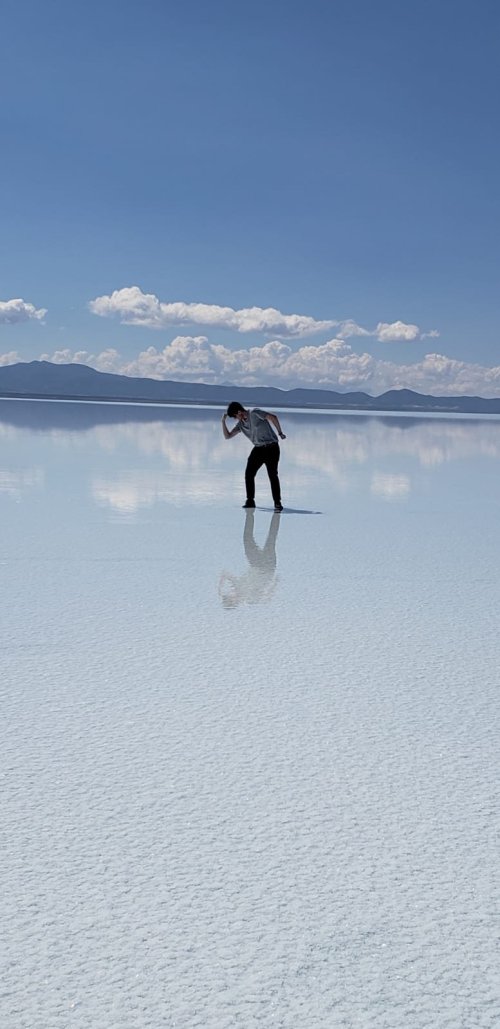
After the trains, we headed to the salt flats. Our guide had brought a range of props for us to take photos with, including a toy dinosaur, which we had some fun with.
A not always comfortable trip (altitude sickness really takes some adjusting to), but undoubtedly a fascinating one. Our next stop is Potosí, where we’ll spend a night before settling for a few days in Sucre.
Ar aghaidh linn 🙂
 Las Aventuras de Stephen y Méabh